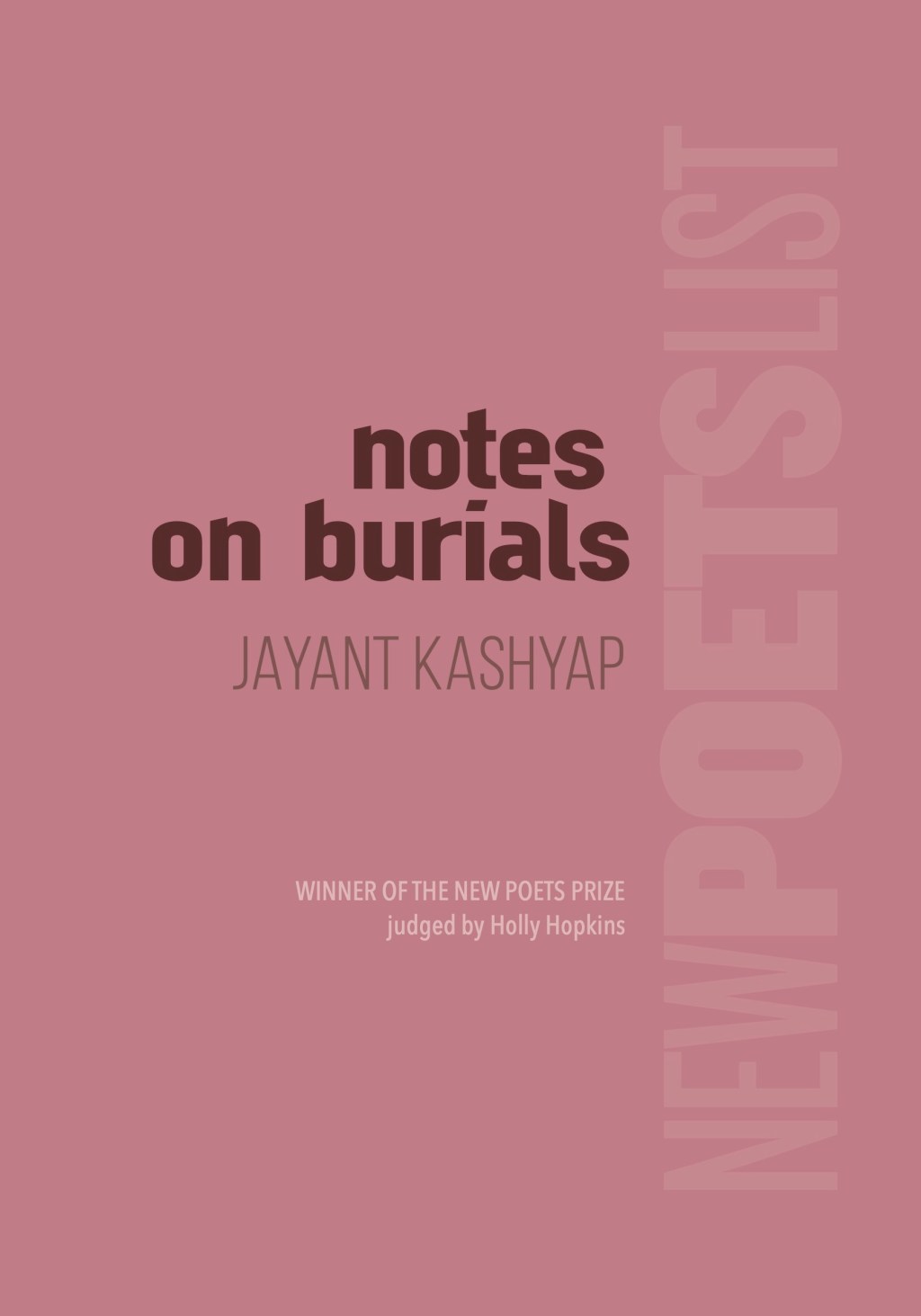
We don’t like to dwell on death, but it leaves visible and invisible marks on our lives. In Notes on Burials, Jayant Kashyap digs deep, exploring rituals and omens that mark death and its immediate aftermath – body and soul. The winner of the Poetry Business New Poets Prize 2024, the volume leaves you to dwell on more than human life, grief and memories. It stands witness to our greed as a race and the destruction of the natural world we leave behind. We speak to Jayant about the collection, his journey and unique approach to poetry. Edited excerpts.
It’s interesting how you draw in animals, birds, seasons into the imagery, almost like they are an indelible part of the loss, anger, grief, aftermath you are trying to portray in Notes on Burials. Was that the aim?
I’ve come to understand over the years that it might be a mistake separating human stories from animal influences because there is no such thing as a split world. We have dogs in our streets, cows in the locality, crows cawing every day at the window. Ecopoetry — the idea of speaking through animals most of the time, placing them in weird places mostly abused by humans — is experimental. But it’s difficult for me to see a place without seeing the animals that inhabit them, and that’s how the poems look at it all.
In writing Notes on Burials, I made a note of how our culture(s) brace the presence of our non-human counterparts, and I saw that there are quite a few instances of the sort. Owls and sparrows appear as important characters in numerous mythologies; and the ferryman always receives a gift—so that was that!
It’s a sombre volume though. What made you focus on this theme?
It is a sombre volume, isn’t it? Marie Howe says in an interview that her brother’s death is the minor part of her collection What the Living Do, his life is a major part of it. I understand this deeply. Notes on Burials is a celebration of my mother’s life.
Why the recurrent use of definitions and etymologies?
Etymology, in itself, is poetic to me. I learnt breaking down words to make sense of what they might mean early on, when studying Sanskrit. One might not expect you to say things in English after learning an approach in Sanskrit, but I’ve enjoyed the process. The things I could say in a poem simply by an insertion of word origins and meanings could’ve taken stanzas otherwise — or it might not have been possible to accommodate them at all. Particularly, in terms of grief, where it’d have been easy to slip into prose and spoil a poem (more so, perhaps, with my way of writing) had I not found out that definitions and etymology could be of great help.

You have published three chapbooks instead of a full-length manuscript. Water is a zine, exploring environmental loss. Has that been a conscious choice or simply how things played out?
For now, it is indeed a conscious choice. We are a distracted lot these days. I’ve got drafts of three full-length manuscripts and more, but working on one demands a fair amount of time. Pamphlets, on the other hand, are more spontaneous.
Who were your early influences?
Among my father’s course books, I found a poetry anthology. I was immediately taken in by A.E. Housman’s poem called ‘Eight O’Clock’. As most poets begin, I started writing criminally bad verse; it got better as I read and wrote more. However, I hadn’t read a full collection until 2016, when a friend introduced me to Agha Shahid Ali’s work. Later, I was able to get in touch with Kathryn Maris and Shara Lessley, who were kind enough to send me their collections. In 2017, I received a copy of Deborah Landau’s The Uses of the Body. Marie Howe has been a major influence. These poets shaped how I see and approach poetry. I read Ali’s The Country Without a Post Office every year in December.
Where do you draw your inspiration from?
I write when I can but I try to read poems everyday. I often write after being inspired by certain stories and poems, such as ‘Prayer for My Mother as a Child’ in Notes on Burials, which is after Miriam Nash’s ‘Prayer for My Father as a Child’, and ‘London, Upon Your Arrival’, which borrows from Agha Shahid Ali in ways.
A poetry volume that you go to when feeling down?
I have over 200 poetry books and anthologies on my shelves so it’s difficult to pick one, but Michael Longley’s Angel Hill would be my top pick since mid-2023.
Are you working on a new collection?
Yes. Titled Annotations on Blue. At present, it is a 100-page manuscript of mostly ekphrastic poetry; it borrows from poetry, paintings, sculptures, mythologies and stories, even twitter posts, and works as one long poem.
Some advice for new poets…
At the start, I’d write a poem and be delusional enough to think that it would get published in Poetry magazine. I got there but it took me some time. When I was published in Poetry in 2022, I didn’t have many publications under my belt, just a poem in Magma. So, the right expectations are important. It’s crucial to read, especially contemporary work. Above all, one must be ready for rejections, hundreds of them, and to accept feedback. Every poet sending work out today receives a bucketful of rejections. I’ve received over half a thousand in the past four years, but that doesn’t deter me. It takes time before you find your voice and niche.
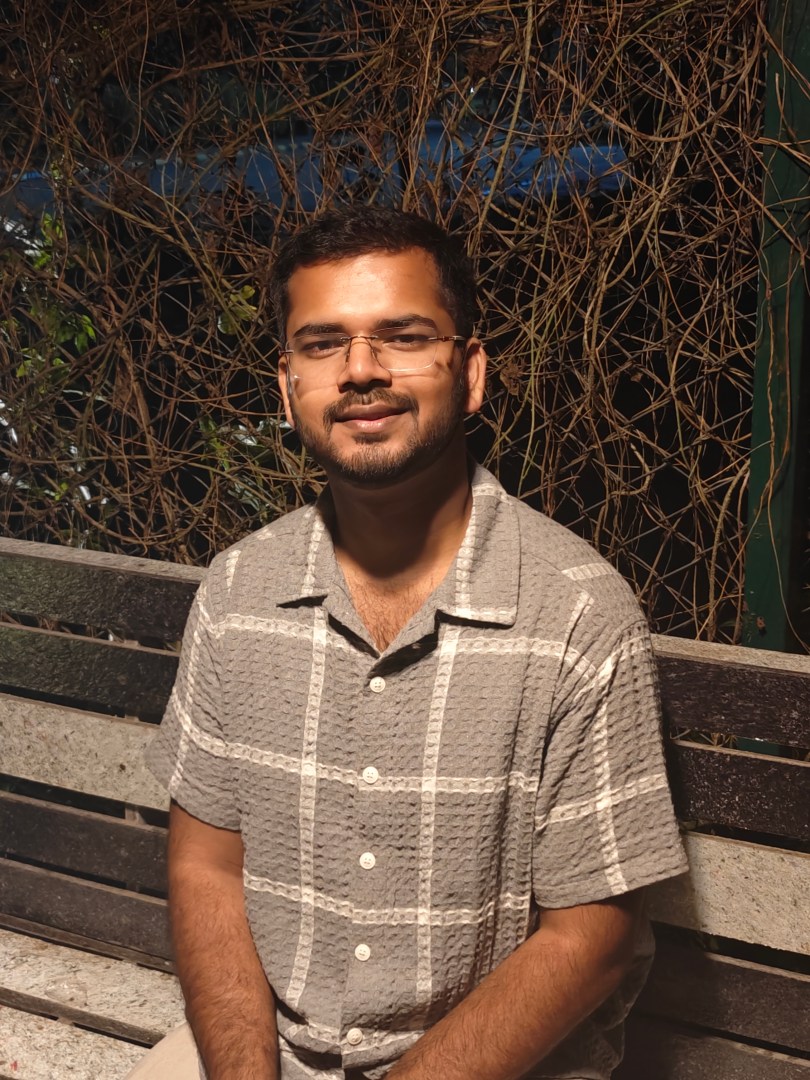
Jayant has published two other pamphlets – Survival and Unaccomplished Cities – and a zine Water. He won the ‘Young Poets International Competition’ at the Wells Festival of Literature in 2021 and a Toto Award for Creative Writing (English) in 2025. One of his poems was also presented at the 2021 United Nations Climate Conference. When not reading or writing poetry, he likes to cook, watch movies and write emails. He’s a self-confessed coffee addict and chances are you will find him flitting in and out of cafes most days. You can order Notes on Burials and follow his work on Instagram.
 A Thousand Mornings